Figuring out how to choose a baby stroller gets easier once you match the stroller type to your daily routine, your baby’s age and stage, the terrain you use most, your family size, your storage and car space, and your budget. With hundreds of models on the market, those details are what separate a stroller that works every day from one that feels bulky, inconvenient, or overpriced after a few weeks.
For expectant parents, new parents, grandparents, and other caregivers in the US, this guide breaks the decision down into practical choices you can actually use. You’ll learn how stroller types compare, which features matter most for newborns, toddlers, city living, travel, and different surfaces, plus what to check for fold size, storage, car seat compatibility, safety, accessories, and overall value so you can stop scrolling and start narrowing down.
Table of Contents
Quick Start: How to Choose a Baby Stroller in 5 Steps
Before you shop: write down these details
- Your child’s current age, height, and weight
- Your trunk, doorway, elevator, and storage measurements
- Your usual terrain and how often you will lift the stroller
- Whether you need an approved newborn configuration, car-seat adapter, or future second seat
- Your maximum budget including adapters, rain cover, and other essentials
If you want a fast framework before reading the full guide, here it is: match the stroller type to your lifestyle first (city versus suburb, car-dependent versus walking, frequent travel versus mostly home), then refine by budget and must-have features like infant car seat compatibility, storage space, and fold size.
Five-step decision flow:
- Baby’s age and stage. Is your baby here yet, or are you planning ahead? Newborns need a flat or near-flat recline, a bassinet, or an infant car seat that clicks onto the frame. Older babies who can sit upright have far more options.
- Primary terrain and use. Smooth sidewalks and mall floors? Cracked city pavement? Gravel trails? Running paths? This determines wheel size and suspension needs.
- Number of children now or soon. One child, twins, or a second child on the way within a couple of years? This decides whether a single stroller, a double stroller, or a convertible stroller makes more sense.
- Home and car storage limits. Measure your front door, elevator, car trunk, and any closet or entryway where the stroller will live. If the stroller doesn’t fit, nothing else matters.
- Budget range. Set a ceiling before shopping. Prices range from under $100 for basic umbrella models to well over $1,000 for modular systems.
The main stroller types you’ll see throughout this guide are full size strollers, travel strollers, jogging strollers, double strollers, and travel systems. Most families fit clearly into one or two categories once they answer the five questions above.
BabySmartPicks is a US-focused stroller information and review site. We do not manufacture or sell strollers directly and may earn affiliate commissions from qualifying purchases.

Key Questions to Ask Before You Shop
Before adding a stroller to a registry or cart, spend five minutes answering these questions. They’ll save you from a return.
- How do you mainly get around? Walking, driving, subway, bus, rideshare? A car-dependent family has different needs than one that walks two miles to daycare.
- Where do you live? A third-floor walk-up apartment changes everything compared to a house with a garage. Think about stairs, elevator size, and hallway width.
- What are your sidewalks like? Smooth concrete, old broken pavement, gravel park paths, or hilly terrain?
- Where will the stroller be stored? Behind a door, in a hall closet, in the garage, in a car trunk full-time?
- What’s your planned family size and timing? If you’re expecting twins or planning a second child within two to four years, a convertible stroller that expands to a double might be smarter than buying twice.
Consideration of lifestyle needs is crucial when choosing a stroller. Write down three “must-haves” (for example: affordable stroller under $300, large stroller basket, under 20 lb weight) and three “nice-to-haves” (like a snack tray, cup holders, or a specific color). This list becomes your filter for everything that follows.
Understanding the Main Types of Baby Strollers
No single “best stroller” fits every family. This section defines the major categories in plain language so you can figure out where you land.
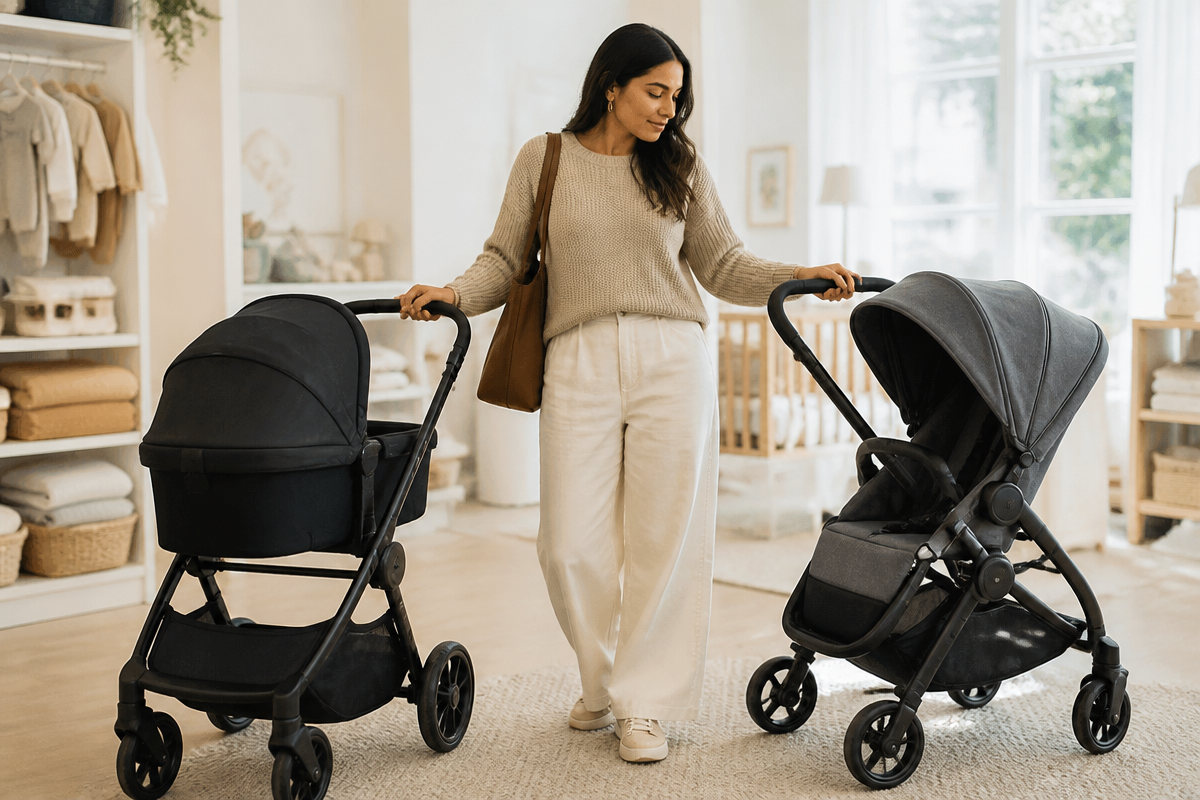
- Full size strollers (all purpose stroller): Sturdy, feature-rich, and versatile for most daily scenarios from birth through preschool.
- Compact and umbrella strollers: Lighter, smaller folds, fewer features, great as a second stroller or for older babies.
- Travel strollers: A step up from basic umbrella models-lightweight, compact, and built for portability on planes, trains, and rideshares.
- Jogging strollers: Three-wheel designs with large tires and suspension for running or rough terrain.
- Double strollers: For two kids, available in side-by-side or tandem layouts.
- Travel systems: A stroller bundled with a matching infant car seat that clicks directly onto the frame.
- Other strollers: Stroller-wagons and car seat frame strollers fill niche roles. Car seat frame strollers are lightweight and budget-friendly options for the infant-only stage.
Later sections cover which type is the right stroller for apartment dwellers, suburban drivers, joggers, active parents, and frequent flyers.
Full Size Strollers (All-Purpose Everyday Rides)
Full size strollers are the default “do-most-things” option for many US families. An all purpose stroller is the versatile everyday choice for errands, walks, and outings, with the comfort and convenience most parents want from birth through toddlerhood.
Typical features:
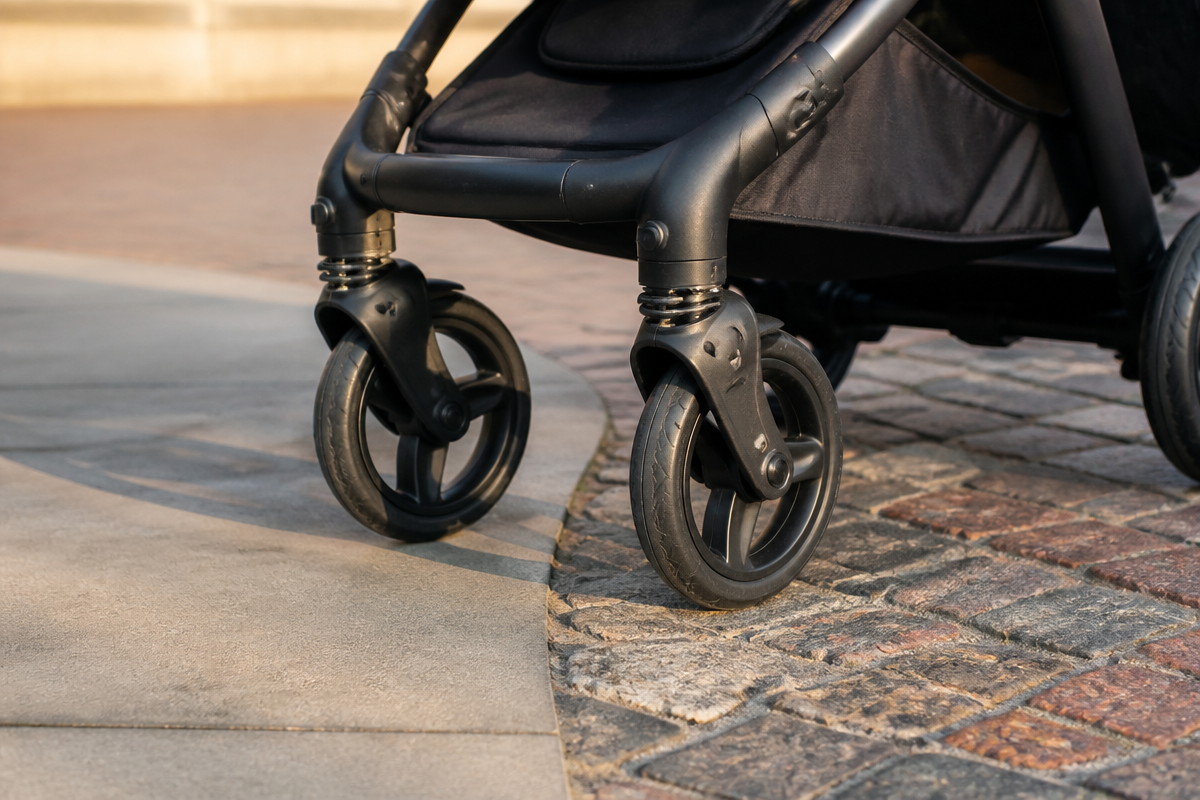
- Bigger wheels (often rubber or foam-filled) and better suspension for a smooth ride over mixed surfaces
- Roomier stroller seat with multiple recline positions
- Larger storage basket and generous canopy
- Car seat compatibility with many popular infant car seats, either directly or through adapters
- Adjustable handlebar on many models
Who they suit best: Parents who walk frequently in cities or suburbs, take long outings, or want one main stroller that feels sturdy and comfortable across years. A model like the UPPAbaby Cruz V3 is ideal for families needing a durable stroller that handles daily mileage without feeling flimsy.
Tradeoffs: A typical full size stroller weighs 20 to 30 lb, which makes it bulkier to carry up stairs and harder to squeeze into a compact car trunk compared to a travel stroller. If portability is your top priority, read the next section.
Compact, Lightweight, and Travel Strollers
If flying, road trips, or a small car are central to your decision, see our guide to choosing a lightweight travel stroller for a travel-specific checklist.
Travel strollers and lightweight strollers generally weigh under 15 to 18 lb and fold down small enough for airplane overhead bins, rideshare trunks, and apartment closets. Travel strollers are lightweight and compact for easy transport-that’s their entire purpose.
Why they work well:
- Air travel (many meet overhead bin dimensions, though always verify with your airline)
- Rideshares where you need to fold fast at the curb
- Grandparents who want a simple, light option
- Small-car trunks or limited closet storage space
Features to look for: One-hand fold, standing fold, carry strap, reasonable canopy coverage, and some under-seat storage even in a compact frame. Lightweight strollers are best for city life and travel where every pound matters.
When a travel stroller can replace a full size stroller: If you mostly use smooth indoor surfaces and city sidewalks, your baby is past the newborn stage, and you don’t need heavy-duty suspension, a quality compact stroller can serve as your everyday stroller. For rougher terrain or newborns, it’s better as a second stroller alongside something sturdier.
Jogging Strollers and All-Terrain Strollers
There’s a meaningful difference between a true jogging stroller (engineered for running at speed) and an all-terrain stroller (built for rougher ground but not necessarily running). Some models blur the line.
Design basics:
- Jogging strollers have three oversized wheels for stability, typically 12 to 16 inches in diameter
- Air filled tires and suspension systems absorb bumps on trails, gravel, and cracked pavement
- A front wheel that locks straight for running and swivels for everyday steering
- A wrist strap on jogging models, which is a safety requirement when running
Safety note: Most manufacturers and Consumer Reports recommend waiting until a child is at least about 6 to 8 months old-some say 12 months-before running with a jogging stroller, even if an infant car seat can click in. Always follow your specific manual and pediatric advice.
The Guava Roam Crossover is a compact jogging stroller worth considering if you want all-terrain capability without the bulk of a traditional jogging stroller.
Who they’re for: Runners, hikers, active parents, and families in areas with cracked sidewalks, trails, or frequent snow. Some can serve as a full size stroller if you have the storage space and don’t mind the extra weight (often 25 to 35 lb).

Double Strollers, Convertible Strollers, and Growing Families
This section is for parents expecting twins, managing kids close in age, or planning another baby within a few years.
Side-by-side vs. tandem:
- Side by side strollers place two seats next to each other. They’re wider (watch for standard 30-inch doorways) but give each child equal views and legroom.
- A tandem stroller stacks seats front to back. Narrower through doors but longer, which can be awkward in tight aisles or elevators.
- Double strollers can be side-by-side or tandem designs-neither layout is universally better; it depends on where you use it.
Convertible strollers: A convertible stroller starts as a single frame and can add a second seat, bassinet, or rider board later. Convertibility allows strollers to grow with a family, making these popular for “one-and-done” purchases that adapt over three to four years. Modular strollers follow a similar philosophy, letting you reconfigure seating as your family size changes.
Must-check details:
- Whether two infant car seats can fit at once (some double strollers do not accommodate two infant car seats)
- Total weight limit per seat and combined
- Folded size with both seats attached-this significantly increases storage demands
- Trunk fit and doorway width with the wider or longer frame
If you have more than one child or plan for more than one kid in the near future, weigh these details carefully before committing.
Travel Systems and Infant Car Seat Compatibility
Travel systems combine a stroller and an infant car seat, usually sold as a bundled set. Travel systems include a stroller and compatible car seat that clicks directly onto the frame.
Advantages:
- Simple car seat transfer from car to stroller without unbuckling a sleeping baby
- No waking a sleeping baby during errands-a genuine quality-of-life win for first time parents
- Usually better value than buying each piece separately
- Newborn-ready from day one
Adapter compatibility: Many strollers not sold as travel systems can still work with infant car seats using brand-specific adapters. This means you’re not locked into one brand. However, always use only manufacturer-approved adapters for safety-aftermarket solutions that aren’t tested by the stroller or car seat maker can create real risk.
Before buying, decide whether you want an infant car seat from the same brand as the stroller or plan to mix brands, and verify compatibility on current manufacturer charts. Car seat compatibility varies by model year, so always check the latest version.
Newborn Readiness: Using a Stroller from Day One
Not all strollers are suitable for newborns without proper support. Younger babies lack the head and neck control to sit upright safely, which means the stroller setup matters more in the first few months than at any other stage.
Newborn-friendly options:
- A stroller seat that reclines to a true flat or near-flat position, rated by the manufacturer for newborn use
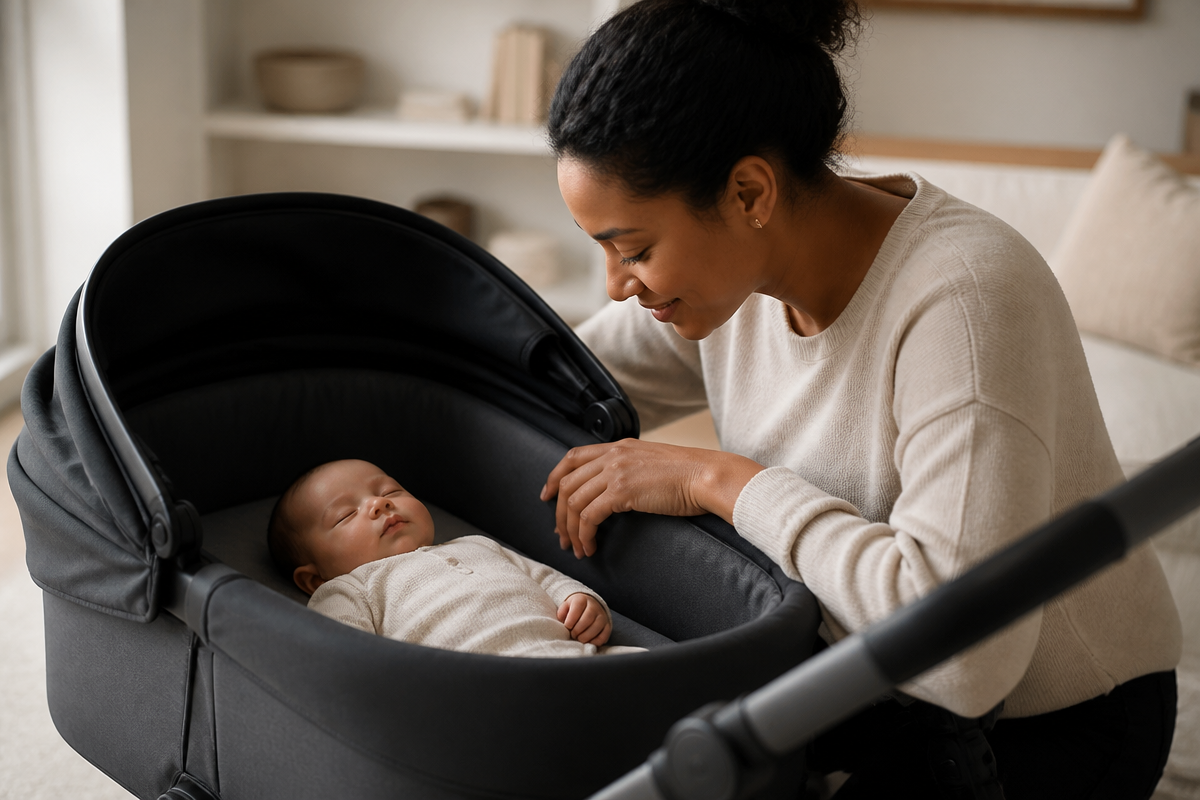
- A bassinet attachment approved for strolling (and sometimes overnight sleep, if it meets safe-sleep product standards)
- An infant car seat that clicks onto the stroller frame
Strollers suitable for newborns must recline fully or accept car seats. If the seat doesn’t go flat enough, a newborn’s head can flop forward, which creates a risk of positional asphyxiation.
How to confirm newborn use: Checking the manufacturer’s minimum age, weight, and height requirements is essential. Look for specific recline angle guidance in the manual and only use head support accessories approved by the stroller brand. Your baby’s age at purchase determines which setup you need.
Think about how often baby will nap in the stroller. If you plan long daily walks during the newborn phase, a bassinet-style setup gives more room than a car seat perched on a frame.
Matching Stroller Choice to Your Daily Terrain and Weather
How and where you walk in an average week matters as much as any spec sheet.
Common US environments and what works:
- Smooth suburban sidewalks and malls: Smaller plastic or hard-rubber wheels work fine. Most strollers handle these surfaces.
- Older city sidewalks with cracks and curb cuts: Larger rubber or foam-filled wheels and decent suspension prevent jarring. A traditional stroller with small wheels will rattle.
- Gravel park paths and light trails: Air filled tires or chunky foam wheels handle this. Small swivel casters struggle.
- Hills: Look for a reliable foot brake that holds on slopes.
- Snow and slush: Larger wheels with tread grip better. All-terrain and jogging models dominate here.
- Hot Southern summers: Ventilated seat backs, mesh panels, and a larger canopy keep baby cooler.
- Rainy climates: A rain cover (sometimes included, often sold separately) is worth having.
When possible, test drive a loaded stroller-with weights or a toddler-on similar terrain at a local store or big-box retailer. Pushing an empty stroller on a showroom floor tells you almost nothing about real-world handling.

Storage Space, Stroller Basket Size, and On-the-Go Organization
Stroller storage is one of the top reasons parents love or regret a purchase. A stroller with a roomy, easy-to-reach basket changes your daily errands.
Under-seat basket basics:
- A large under-seat basket is important for carrying diaper bags and groceries
- A stroller basket typically holds 10 pounds on the lower end, though many larger baskets handle 15 to 30 lb-always check the label for the specific weight limit
- Basket access direction matters: some open from the front, some from the rear, and some get blocked when the seat recline is fully flat or a second seat is attached
Additional storage:
- Parent consoles, cup holders, and zip pockets add convenience without much bulk
- Ample storage means fewer trips and less juggling when you’re solo with a child
City parents and non-car families should prioritize a generous, easy-to-access stroller basket if they plan to haul groceries, library books, or daycare bags. A tiny basket on an otherwise great stroller will frustrate you daily.
Size, Weight, and Fold: Will It Fit Your Life?
A stroller’s real-world usability depends heavily on three things: how much it weighs, how small it folds, and how fast you can collapse it one-handed while holding a child.
Specific checks before buying:
- Stroller width versus your front door and interior doors (standard US interior doors are about 30 inches; many older apartment doors are narrower)
- Height when folded versus your closet depth or entryway hooks
- Length when folded versus your car trunk dimensions, leaving room for groceries, a suitcase, or a pet crate
- How much the stroller weighs-stroller weight affects portability and ease of use, especially on stairs
Look up the stroller’s dimensions (length × width × height both open and folded) and compare them to your vehicle and home space before ordering online. A stroller that looks perfect on a website can become a daily headache if it doesn’t clear your doorframe.
Convenience features:
- A one-handed fold feature is highly convenient for parents who are holding a child or a bag
- A compact fold that stands on its own leans neatly against a wall
- Carrying handles or shoulder straps make a difference for walk-up apartments
If you face stairs daily, set a personal weight limit you can safely carry-often 20 lb or less-and shop within that range.

Handlebars, Maneuverability, and Who Will Push the Stroller
Comfort for the person pushing matters on long walks. If two caregivers of different heights share the stroller, an adjustable handlebar prevents shoulder and back strain.
Handlebar options:
- Telescoping handlebars extend up and down for height
- Rotating handlebars tilt to change angle
- Strollers can have adjustable handlebars for different heights-not all do, so check before buying
Maneuverability basics:
- Turning radius: smaller front wheels swivel tighter in stores and on crowded sidewalks
- One handed steering matters when you’re carrying a coffee, holding a toddler’s hand, or opening a door
- Navigating tight spaces like elevator doors, narrow store aisles, and café tables is easier with a compact frame and responsive front wheel
Test-drive strollers with one hand, around corners, and through mock “aisles” in the store. Read user reviews specifically about steering-spec sheets can’t capture how a stroller actually feels mid-turn.
Safety Essentials: What Every Stroller Should Have
Strollers must meet U.S. Consumer Product Safety Commission standards under 16 C.F.R. § 1227, which incorporates ASTM standard F833. All new strollers sold in the US must comply, but safety still varies in design details and-critically-in how a stroller is used.
Core safety features:
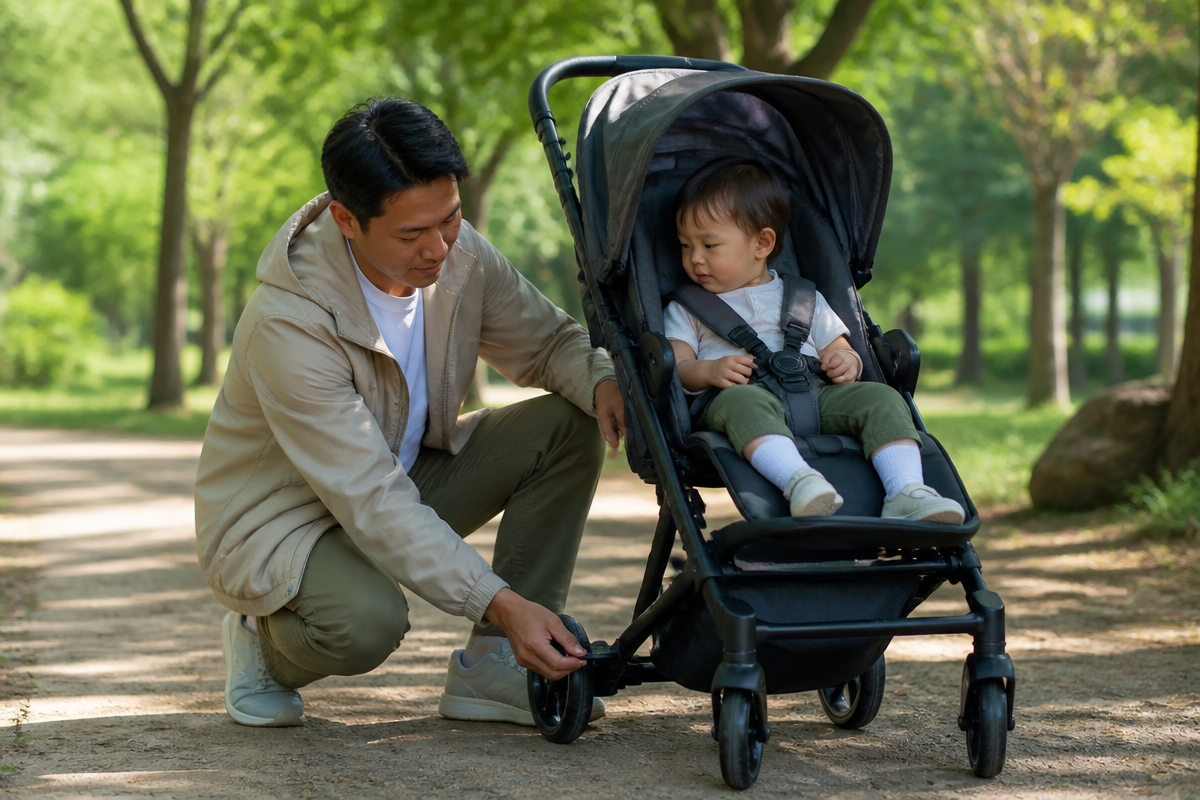
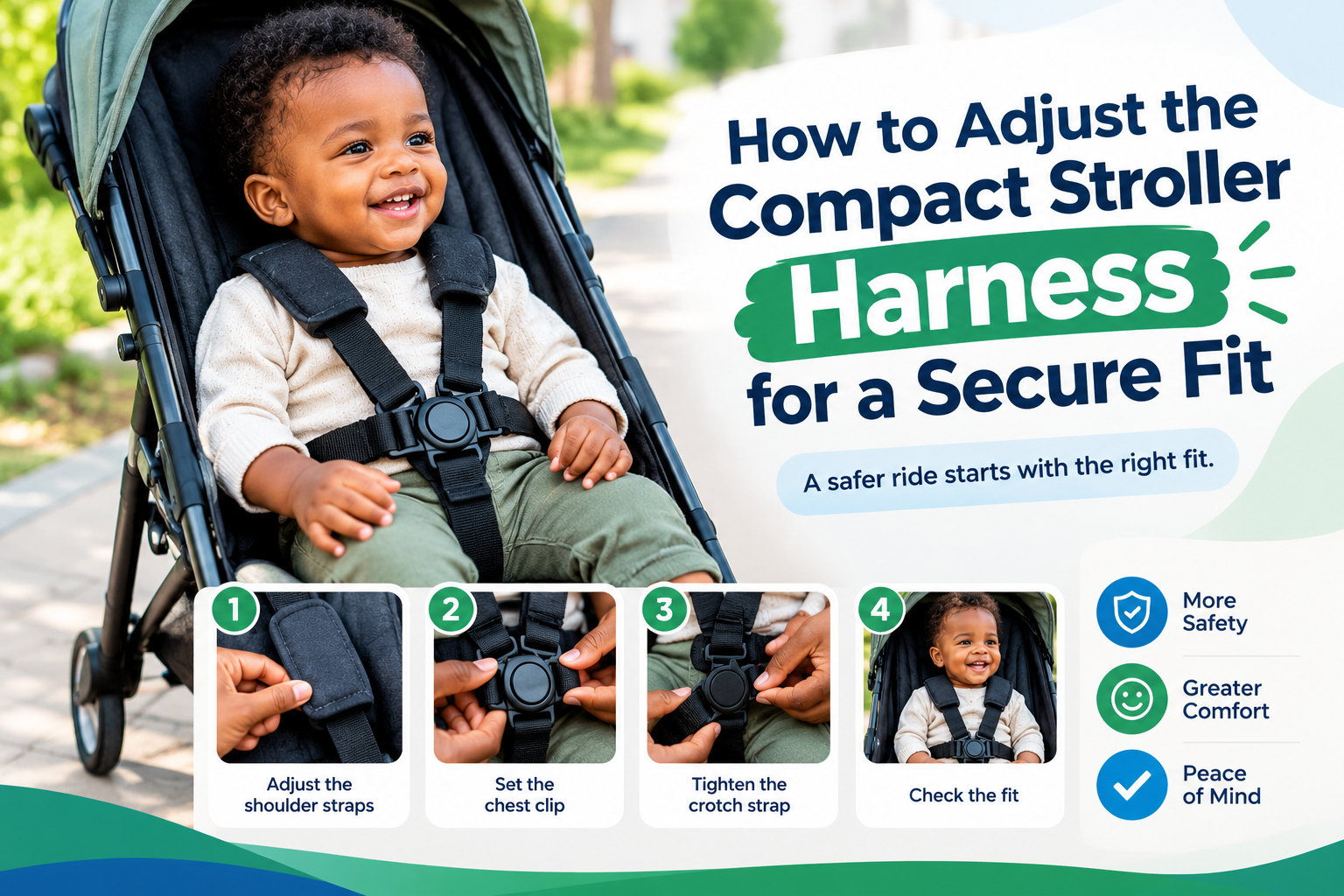
- A five-point harness is the safest restraint system. It secures shoulders, hips, and crotch. Always use every strap, every time-skipping the crotch strap creates an entrapment risk between the tray and seat.
- Brakes should be easy to engage and intuitive to use. A foot brake you can see and feel when locked prevents rollaway incidents, especially on slopes.
- A wide and stable wheelbase enhances stroller stability and reduces tip-over risk.
- No sharp edges or pinch points in the folding mechanism-test this with your own hands before your child is nearby.
- Strollers should have sufficient leg enclosures for infants to prevent small legs from slipping through gaps.
Additional features to look for:
- A wrist strap on jogging and many all-terrain models
- Reflective accents for early-morning or evening walks
- Clear maximum weight and height limits printed on the frame or in the manual
Register your stroller with the manufacturer for recall alerts. If buying used or older models, check the CPSC recall database before using it.
Comfort Features for Your Baby (and You)
Comfort features affect how long your child will happily ride-especially once they become strong-willed toddlers who’d rather walk (or run).
Baby comfort:
- Multi-position seat recline, from upright for curious toddlers to flat for napping younger babies
- An adjustable leg rest for longer-legged kids
- Padded seat and a removable, washable seat cover
- Ventilated mesh panels for hot climates
- A bigger sun canopy provides more shade for your child, and a spacious canopy protects your baby from sunlight during long outings-look for UPF 50+ fabric and a peek-a-boo window
Caregiver comfort:
- Ergonomic or cushioned handlebar grips
- Suspension that softens bumps so you feel less vibration through the handlebar
- Optional add-ons like padded harness strap covers
Think about your typical walk length. A 10-minute errand to the pharmacy has different comfort demands than an all-day theme park or family trip. If you do long outings, invest in better seat recline and canopy coverage.
Budget, Value, and Finding an Affordable Stroller
BabySmartPicks covers options from around $70 budget umbrella strollers to $1,200+ modular systems, but price alone doesn’t determine the best stroller for a family.
Rough US price bands (2025–2026):
- Travel and lightweight strollers: $70–$350
- Full size strollers: $200–$600 (premium above that)
- Jogging and all-terrain strollers: $200–$700
- Double strollers: $150–$800+, with some modular systems over $1,000
These ranges come from current market surveys and shift with sales, bundles, and new releases.
What you gain as you move up a tier:
- Better suspension and wheel quality for a smoother ride
- Higher-quality fabrics that resist stains and last through a second child
- Smoother fold mechanisms
- Longer warranties and better customer support
- More included stroller accessories
An affordable stroller pick often drops extras like a rain cover, snack tray, or cup holders-items that can be added later as stroller accessories if budget allows. Pricier strollers tend to include more out of the box, but you’re also paying for brand prestige in some cases.
Set a ceiling before shopping. Under $300, $300–$600, or $600+ are common brackets. Then ask: what do I truly need at this price, and what am I paying for that I won’t actually use?
Car Use: Trunk Fit, Travel Systems, and Rideshares
Most US families use a car, so car trunk fit is a practical dealbreaker.
Measuring trunk fit:
- Measure your trunk opening (width and height) and compare it to the stroller’s folded dimensions
- Consider what else lives in the trunk-groceries, a suitcase, a dog crate
- A compact fold matters more in a sedan than in a large SUV
When a travel system helps most: If you’re car-dependent with a newborn, a travel system (infant car seat plus stroller) lets you move a sleeping baby from car to stroller without unbuckling. For a small sedan, a separate compact stroller plus a standalone infant car seat might take up less space than a bulky travel system frame.
Rideshare considerations:
- You need a car seat approved for baseless installation (check your car seat manual)
- A lighter travel stroller that folds quickly at the curb saves awkward minutes with a waiting driver
- Most strollers go in the trunk; the fold speed and total weight become critical when you’re standing on a sidewalk
Apartment and Small-Space Considerations
If you live in a city apartment or smaller home, the stroller’s footprint when stored matters as much as its performance on the sidewalk.
Before buying, measure:
- Building entrance doors and apartment door width
- Elevator interior dimensions (some older elevators are surprisingly narrow)
- Hallway width, especially if shared with neighbors
- Your planned storage spot-behind a door, in a closet, under a coat rack
For city life, choose lighter, narrower frames. A travel stroller or slim full size model works better than a wide all-terrain stroller if the stroller must be carried up several flights of stairs or stored in a shared hallway.
Standing fold versus flat fold matters here. A standing fold lets you lean the stroller against a wall in a small entryway. A flat fold might slide under a bed or onto a closet shelf. Think about which fits your space.
Comparing Popular Stroller Types: Pros and Cons at a Glance
For an example of how a premium and value-focused modular stroller can differ, read our Nuna vs. Mockingbird stroller comparison.
Here’s a quick comparison to help you weigh your primary options.
Full size stroller vs. travel stroller:
- Full size: more comfortable seat, better suspension, larger basket, and better newborn options. Heavier, bulkier, and harder to travel with.
- Travel stroller: lighter, folds smaller, easier in cars and planes. Less cushioning, smaller basket, may not suit younger babies without accessories.
Jogging stroller vs. other strollers for everyday use:
- Jogging stroller: superior on rough terrain, stable at speed, durable tires. Heavy, wide, hard to navigate in stores and tight spaces.
- A versatile stroller (full size or compact) handles daily errands better indoors. Less capable on trails or for running.
Convertible stroller vs. fixed single stroller:
- Convertible: adapts from one seat to two, supports changing family size, can reduce total spend over years. More expensive upfront, heavier even in single mode, more complex.
- A single stroller is lighter, simpler, and often cheaper-but if a second child arrives, you may need to buy again.
Most families benefit from picking one “primary” stroller category and adding a cheap umbrella stroller or compact travel stroller as a secondary option if budget allows. You don’t need one stroller to do everything-sometimes two simpler strollers cover more ground than one complicated one. Many strollers serve as a favorite stroller for one purpose but fall short in another.
Accessories and Add-Ons That Actually Matter
Stroller accessories can make daily life easier, but they add up in cost quickly. Focus on what you’ll actually use.
High-impact accessories:
- Rain cover (essential in wet climates, often brand-specific for best fit)
- Footmuff or bunting for cold-weather walks
- Snack tray for toddlers who need crackers within arm’s reach
- Parent console for phone, keys, and a water bottle
- Attachable stroller board for an older sibling who wants to ride
- Travel bag for checking or gate-checking a stroller on flights
Brand-specific vs. universal: Snack trays, toddler boards, and bassinets are usually brand-specific. Clip-on organizers, cup holders, and weather covers tend to be more universal-but always confirm compatibility before buying. Third-party parts that don’t fit securely can become safety hazards.
Prioritize safety over aesthetics when it comes to aftermarket parts. A cheap phone mount that pops off and lands on a child is worse than no phone mount at all.
Trying Strollers In Person vs. Shopping Online
Both approaches have clear advantages. The smartest route combines them.
What to test in-store:
- Push with one hand-does it track straight or pull to one side?
- Fold and lift it as if loading into an imaginary car trunk. Testing the fold mechanism before buying is highly recommended.
- Adjust the seat recline and harness with one hand (simulating holding a child with the other)
- Reach into the stroller basket with the seat fully reclined-can you still access it?
- Check the stroller’s dimensions against your mental map of your door, hallway, and trunk
What online shopping adds:
- Wider selection than any single store
- Sale prices and bundle deals
- Hundreds of real-world user reviews covering maneuverability, fold quality, and long-term durability
- BabySmartPicks comparison guides that put models side by side
Before ordering, check return policies and warranty coverage. Big-box retailers often have generous return windows. Direct-from-brand purchases sometimes offer longer warranties but stricter return terms.
Common Mistakes When Choosing a Stroller (and How to Avoid Them)
These are the regrets BabySmartPicks sees most often in user feedback and product reviews.
Common pitfalls:
- Buying for looks or brand name alone. A beautiful stroller that doesn’t fit through your front door or into your car trunk is a $700 coat rack.
- Ignoring the stroller basket. Undersized or hard-to-reach baskets create daily frustration, especially for families without a car.
- Choosing a stroller too heavy for your reality. If the stroller weighs 30 lb and you climb stairs daily, you’ll stop using it.
- Skipping measurements. Not measuring doorways, elevator openings, and trunk dimensions before ordering is the single most avoidable mistake.
- Overlooking newborn compatibility. Assuming any stroller works from birth can put a newborn at risk.
- Not thinking about a second child. Buying a stroller that can’t expand or convert when another baby is likely within two years.
- Overbuying a massive double stroller. If you have multiple children but they’re spaced far apart in age, a rider board on a single stroller may work better than a heavy tandem stroller.
Quick fixes:
- Use return-exchange windows aggressively if something doesn’t fit your life
- Add a lightweight second stroller later rather than forcing one stroller to do everything
- Add a rider board to a single stroller instead of jumping to a full double when you have two kids
How BabySmartPicks Helps You Compare and Decide
BabySmartPicks is a US-focused stroller information and affiliate site. We don’t manufacture or sell baby strollers directly-our job is to help you compare options so you can make a confident choice.
What we publish:
- Detailed stroller reviews covering fold, weight, ride quality, and real-world usability
- Side-by-side comparisons for readers torn between two or three models
- “Best for” lists (best jogging strollers, best travel systems, best affordable stroller picks, best for multiple kids) organized by lifestyle
- How-to guides on folding, cleaning, traveling with, and maintaining baby gear
Our recommendations are researched using manufacturer manuals, current US safety guidance, and parent feedback. We’re transparent about what we haven’t tested hands-on and we don’t offer medical or professional safety certification. When safety-critical details are involved-like newborn recline angles or car seat compatibility-we point you to the manufacturer’s current documentation and relevant CPSC guidance.
Verify before purchase
Stroller specifications, compatibility, prices, return terms, and recall information can change. Before purchasing, confirm the exact model’s age and size limits, approved car-seat or bassinet configuration, folded dimensions, and current recall status directly with the manufacturer and the U.S. Consumer Product Safety Commission. This guide is educational and does not represent hands-on testing of every model.
Conclusion
Finding the perfect stroller starts with understanding your own routine, not someone else’s Instagram feed. Use the five questions from the top of this guide to narrow your search, compare two or three finalists using current specs and reviews, and always verify compatibility and safety details in the manufacturer’s manual before your first ride. The right stroller is the one that fits your door, your trunk, your budget, and your daily life-and most strollers on the market do at least a few of those things well. Your job is to find the one that handles all of them.


Leave a Reply