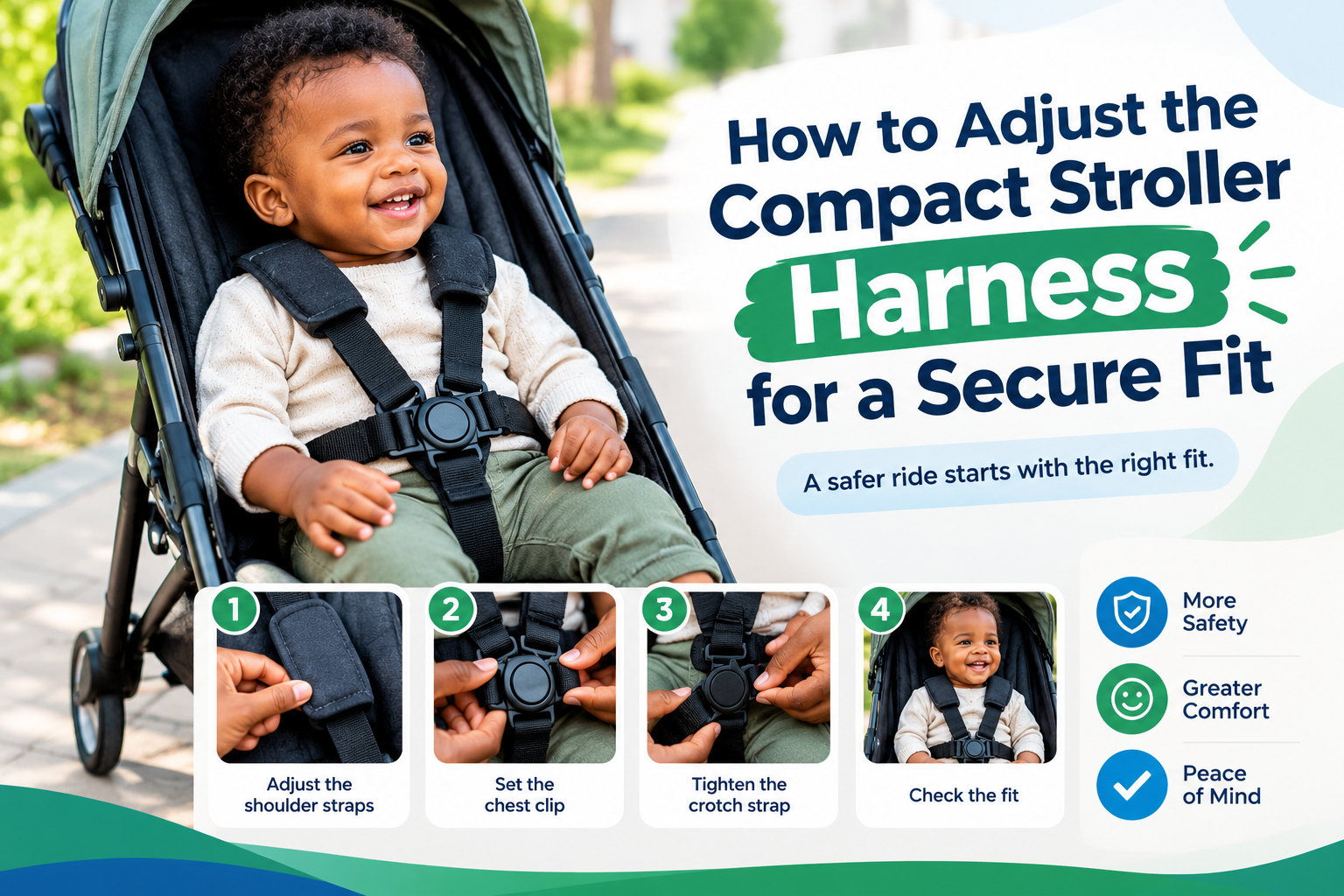
A loose compact stroller harness is more than a minor annoyance. In a sudden stop or an accidental tip over, a poorly fitted strap system fails to keep a child contained, leading to avoidable injuries. Compact strollers present unique challenges because their lightweight frames and folding mechanisms often require more frequent harness checks to maintain a secure fit. This guide provides a detailed walkthrough to ensure your child remains safe and comfortable in their seat through every growth spurt.
Table of Contents
Understanding the Components of a Compact Stroller Harness
Most modern compact strollers utilize a 5-point harness system. This design secures the child at five distinct points: two at the shoulders, two at the hips, and one between the legs. By distributing the force of an impact across the strongest parts of the body, the 5-point system minimizes the risk of internal injury or ejection.
Compact strollers often use thinner webbing to allow for a smaller fold. This means the straps can twist more easily than those found on full-sized joggers. Familiarize yourself with the buckle mechanism. In 2026, many premium compact models feature magnetic buckles that snap together effortlessly, but these still require manual tensioning to remain effective. If you are using an older model or a budget-friendly option, you likely have a traditional click-in buckle that requires each side to be inserted independently.
Before making any adjustments, ensure the stroller is on a flat surface with the wheels locked. It is much easier to gauge the fit when the seat is not shifting under the weight of your child. If you are currently moving from an infant configuration to a seated one, you might also need to learn how to convert your stroller bassinet to a toddler seat for better visibility to ensure the harness is oriented correctly for a sitting child.
Finding the Perfect Shoulder Strap Height
Correct shoulder strap height is the foundation of stroller safety. If the straps are too low, they can compress the child’s spine. If they are too high, the child can slip out from under them during a bump.
For a forward-facing child in a compact stroller, the shoulder straps should be positioned at or slightly above the child’s shoulders. If the stroller is in a rear-facing mode (common in some travel-centric compacts), the straps should be at or slightly below the shoulders.
No-Rethread vs. Manual Threading
When threading manually, ensure both straps are in the same slot level. An uneven harness can cause the stroller to pull to one side or cause the child to sit crookedly, which affects the overall center of gravity of a lightweight compact frame.
Adjusting Waist and Crotch Straps for Stability
While the shoulders get the most attention, the waist and crotch straps are what prevent a child from sliding out the bottom of the stroller (a hazard known as submarining).
The Waist Straps
The waist straps should wrap snugly around the child’s hips, not their soft abdomen. Adjust these by pulling the loose end of the webbing through the plastic sliders. In compact strollers, these sliders are often tucked into the sides of the seat to prevent them from digging into the child’s ribs. Ensure there is no slack between the hip attachment point and the buckle.
The Crotch Strap
Many compact strollers offer two or three positions for the crotch strap. As your child grows, you must move this strap forward to prevent it from being pinned underneath them. A crotch strap that is too far back is uncomfortable, while one that is too far forward allows too much forward movement in the seat. Most manufacturers recommend moving the crotch strap to the outer slot once the child reaches a certain weight or when the strap no longer clears the front of their body comfortably.
The Pinch Test and Proper Tensioning
Tensioning is the final step in securing the harness. Many parents leave the straps too loose, fearing they will hurt the child. However, a loose harness is a safety hazard.
To perform the Pinch Test, place your fingers on the harness strap at the child’s collarbone. Try to pinch the webbing vertically between your thumb and forefinger. If you can pinch any fabric and fold it over, the harness is too loose. You should keep tightening until your fingers simply slide off the smooth webbing.
A secure fit should be snug like a firm hug, but you should still be able to fit two fingers flat between the strap and the child’s chest. This allows for breathing room while ensuring the child cannot wiggle their arms out of the loops.
Handling Different Harness Types in 2026
As stroller technology evolves, so do the ways we secure our children. Here is a comparison of the common harness systems you will encounter on the market today.
| Harness Type | Best For | Pros | Cons |
|---|---|---|---|
| Standard 5-Point | Universal use | Extremely secure; prevents all exit routes. | Can be tedious to buckle with a wiggly toddler. |
| Magnetic Buckle | Frequent stops | Fast connection; great for parents with limited hand dexterity. | Can be more expensive; requires checking for debris in the magnet. |
| 3-Point Harness | Older toddlers | Easy to use; less restrictive. | Not safe for infants; provides no upper body restraint. |
| One-Pull Systems | Busy parents | Allows tightening of all straps simultaneously via one cord. | Mechanical complexity can lead to jamming if not cleaned. |
If your stroller uses a one-pull system, ensure the central adjustment button is free of crumbs or sand. If this mechanism sticks, it can give a false sense of security, where the straps feel tight but pull loose under pressure.
Seasonal Adjustments and Clothing Considerations
One of the most common mistakes in harness safety occurs during seasonal transitions. A harness adjusted for a child in a summer t-shirt will be far too tight for a child in a puffy winter coat. Conversely, a harness adjusted for a winter coat will be dangerously loose if the child wears only a light sweater the next day.
Safety Tip: Bulky coats should never be worn under a stroller harness. The padding in the coat compresses during an impact, creating a massive gap between the child and the strap. Instead, secure the child in their regular indoor clothing, tighten the harness, and then place a blanket or a dedicated footmuff over the top. If you are dealing with rain or wind, it is better to attach a universal stroller rain cover to keep your baby dry in storms than to bulk up the child’s clothing.
Always re-check the Pinch Test every time you place the child in the stroller. It only takes five seconds but can prevent a significant accident.
Troubleshooting Common Harness Problems
Even the best compact strollers can experience harness issues over time. Here are the most frequent problems and how to solve them.
Maintaining Harness Safety Over Time
Over months of use, harness webbing can stretch slightly or become worn from the friction of the sliders. Inspect the straps monthly for any signs of fraying or thinning. If the webbing looks fuzzy or has visible tears, contact the manufacturer for a replacement harness. Most compact strollers have replaceable harness sets that are relatively inexpensive compared to the cost of a new stroller.
Sun exposure can also weaken nylon webbing over several years. If you are using a second-hand stroller or one that has been stored in a hot garage, test the strength of the straps by giving them a firm tug. If they feel brittle or the color has faded significantly, the integrity of the material may be compromised.
Using AI to Optimize Your Stroller Setup
If you’re unsure if your harness is correctly positioned, you can use AI tools to analyze a photo of your setup.
Analyze this photo of a child in a compact stroller harness. Check the shoulder strap height relative to the collarbone, the tension of the waist straps, and the position of the crotch buckle. Provide specific feedback on whether the harness needs to be tightened or moved to a different slot based on standard 5-point safety guidelines.
This type of prompt, when used with a multimodal AI model, can provide an extra layer of reassurance for first-time parents navigating gear for the first time.
Frequently Asked Questions
How tight should stroller straps be?
The straps should be tight enough that you cannot pinch any excess webbing at the shoulder, but loose enough to fit two fingers between the strap and the child’s chest.
When should I move the shoulder straps to a higher slot?
Move the straps up as soon as the current slot is below the child’s shoulders when they are sitting upright in a forward-facing position.
Can I use a 3-point harness for a newborn?
No, newborns require a 5-point harness to provide essential upper body support and prevent them from sliding out of the seat.
Is it safe to use harness pads?
Only use harness pads provided by the stroller manufacturer, as third-party pads may be too bulky and interfere with a proper tighten.
What if my child hates the tight harness?
Consistency is key; explain that the harness is like a seatbelt in a car. Ensure the straps aren’t rubbing their neck by using the manufacturer-approved soft covers.
Adjusting your compact stroller harness correctly is a non-negotiable part of daily parenting. By taking the time to understand the 5-point system, performing the Pinch Test, and adjusting for seasonal clothing, you ensure that every outing is as safe as it is convenient. Check your straps today and make the necessary tweaks to keep your little one secure.
If you found this guide helpful, share it with a fellow parent or explore our other gear maintenance tips to keep your stroller in top condition for years to come.


Leave a Reply