
A sudden downpour while you are miles from home with a crying infant is a stressful reality for many parents. You might have a rain cover tucked in the bottom basket, but fumbling with tangled straps and wet plastic while the wind picks up often leads to a soaked stroller and a cold baby. This article will guide you on how to attach a universal stroller rain cover to keep your baby dry in storms.
This guide provides a clear roadmap for mastering your universal stroller rain cover, ensuring a tight seal every time. You will learn the specific mechanics of attachment, how to maintain proper airflow, and why the right installation is the difference between a dry ride and a soggy disaster.
Table of Contents
Understanding Universal Fit Mechanics
Universal rain covers are designed to be the versatile workhorses of the baby gear world. Unlike brand-specific covers that only snap onto one model, a universal shield utilizes elasticized edges, adjustable Velcro straps, and tension-based designs to accommodate everything from compact umbrellas to heavy-duty jogging strollers.
In 2026, the technology behind these covers has advanced significantly. We now see “multi-point articulation,” which means the cover can stretch in specific zones without tearing. When you look at your cover, identify the three primary components: the crown (the top part that sits on the canopy), the viewing window (the clear front panel), and the anchor points (the straps at the bottom and sides).
Choosing a universal option is often smarter for families who own multiple strollers or plan to upgrade their gear soon. It eliminates the need to buy a new $50 accessory every time you swap your travel system. However, the “universal” tag means you have to be more diligent during installation to ensure there are no gaps where wind-driven rain can seep in.
Preparation Before the Clouds Break
Waiting until the first drops of rain hit your forehead to learn how your cover works is a common mistake. Professional caregivers recommend a “dry run” in your living room. This allows you to adjust the strap lengths and identify where the cover might snag on your specific frame.
Before you head out, check the integrity of the attachment points. Look for frayed elastic or cracked plastic. If you have recently performed a deep clean on your gear, ensure the frame is free of debris. Using a clean compact stroller frame and fabric ensures that the Velcro or clips on your rain cover have a secure surface to grip onto without slipping.
The Pre-Storm Checklist
1. Unfold the cover completely: Let it sit at room temperature for an hour to remove creases from storage. Cold, stiff plastic is much harder to manipulate in a storm.
2. Identify the front: Most covers have a larger clear panel at the front. Locate the air vents—these must always face the sides or front, never be blocked by the stroller seat.
3. Check for odors: Modern TPU (Thermoplastic Polyurethane) covers are usually odorless, but older PVC versions can off-gas. Let it air out to keep the interior environment fresh for your baby.
Step by Step Installation Guide
Follow these steps to achieve a professional, wind-resistant fit that keeps your child bone-dry.
1. Fully Extend the Stroller Canopy
Most rain covers rely on the stroller’s own sun canopy to act as a skeletal support. If the canopy is retracted, the rain cover will sag, creating puddles that can eventually leak through the seams or weigh down on the child. Open the canopy to its widest setting before draping the plastic.
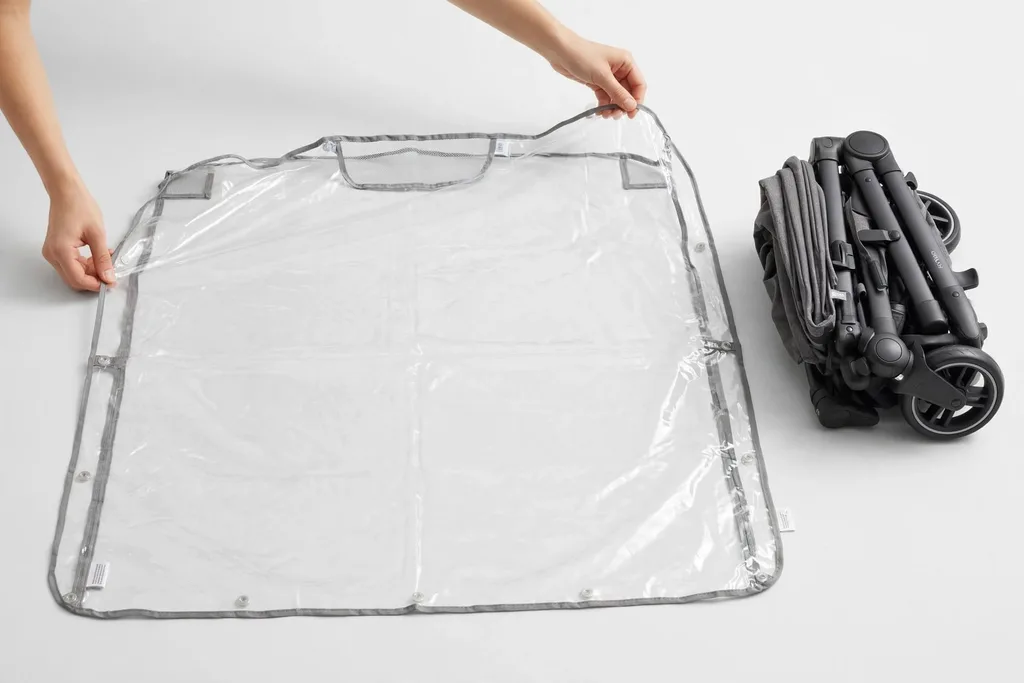
2. Drape from Top to Bottom
Hold the cover at the top corners and lay it over the canopy. Align the top seam of the cover with the highest point of the stroller. Ensure the clear window is centered. If your cover has a “peek-a-boo” flap at the top, align it with the stroller’s existing window so you can still see your baby from the handlebar position.

3. Secure the Handlebar Anchors
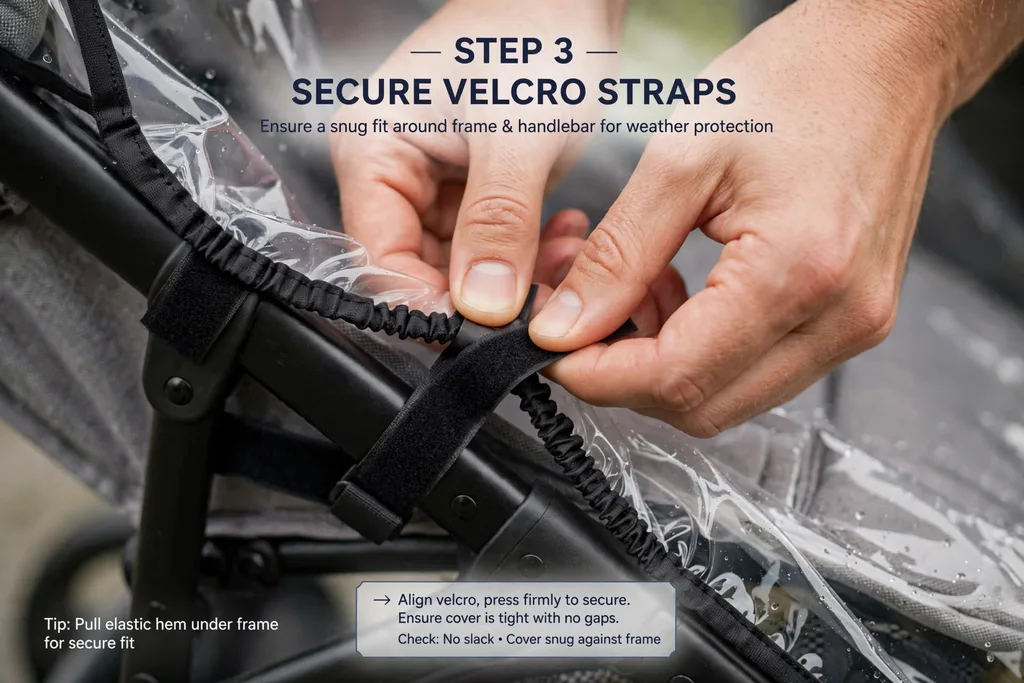
Most universal covers have Velcro or buckle straps near the top rear. Loop these around the stroller frame near the handlebars. Do not pull them too tight yet; you need a little slack to adjust the bottom half. These anchors prevent the cover from sliding forward over the child’s face if a gust of wind hits from behind.
4. Align the Front and Footrest
Pull the front of the cover down over the footrest. This is where most universal covers use an elastic hem. Stretch the elastic under the footrest or the front of the stroller frame. If your stroller has a very long footrest, you may need to use the secondary straps often found at the bottom corners to hook onto the front wheel assembly.
5. Fasten the Side Straps
Look for the mid-point straps. These are crucial for preventing the “sail effect,” where wind gets under the cover and lifts it up. Wrap these around the side tubes of the frame. Ensure they are positioned away from any moving parts, such as the folding mechanism or the brake levers.
Adapting to Different Stroller Frame Styles
Not every stroller is shaped the same, and a universal cover requires different strategies based on your gear’s architecture.
Safety Standards and Ventilation Requirements
Safety is the most important factor when enclosing a child in a plastic environment. Even in 2026, air circulation remains the primary concern for rain cover manufacturers.
Never leave a child unattended while the rain cover is attached. The temperature inside the stroller can rise quickly, even on a cool, rainy day. Universal covers are equipped with mesh side vents or perforated holes. Ensure these are not obstructed by blankets, toys, or the stroller’s own fabric.
If the clear plastic begins to fog up significantly, it is a sign that the humidity is too high and the airflow is insufficient. Open the front zipper slightly—most modern covers have a two-way zipper—to allow fresh air to circulate without letting rain in.

Comparison of Modern Rain Cover Materials
When selecting or using a universal cover, the material dictates how easy it is to attach and how long it will last. Use this table to understand what you are working with.
| Material Type | Flexibility | Clarity | Durability | Best For |
|---|---|---|---|---|
| TPU (Thermoplastic Polyurethane) | High | Excellent | High | All-weather use, cold climates |
| EVA (Ethylene Vinyl Acetate) | Medium | Good | Medium | Occasional light rain, budget-friendly |
| PVC (Polyvinyl Chloride) | Low | High | Low | Emergency use only (prone to cracking) |
| Graphene-Infused Polymer | Very High | Excellent | Ultra-High | Professional 2026 high-end models |
TPU has largely replaced PVC in 2026 due to its eco-friendly nature and its ability to remain flexible in sub-zero temperatures. If your cover feels stiff and makes a loud crinkling sound, it is likely an older EVA or PVC model and should be handled with care to avoid tearing near the strap attachments.
Cleaning and Long Term Maintenance
Proper care extends the life of your rain cover and ensures it remains clear for your baby to see through. After every use, do not fold it up immediately. Folding a wet cover traps moisture, leading to mildew and a cloudy film that is nearly impossible to remove.
1. Dry it flat: Hang the cover over a chair or a shower rod until every drop of water has evaporated.
2. Spot clean: If mud splashes onto the cover, use a soft microfiber cloth and lukewarm water. Avoid harsh chemicals that can degrade the UV-resistant coating.
3. Storage: Store the dry cover in a fabric bag rather than a plastic one. This allows the material to “breathe” and prevents the plastic from sticking to itself.
If the cover becomes wrinkled, do not use an iron. Instead, use a handheld steamer on the lowest setting from at least six inches away, or simply hang it in a steamy bathroom for fifteen minutes. The heat will relax the polymer chains and restore the clear view.
Conclusion
Mastering the attachment of a universal stroller rain cover is a vital skill for any parent navigating the unpredictable weather of 2026. By ensuring the canopy is fully extended, anchoring the top straps first, and maintaining clear ventilation paths, you provide your baby with a dry, safe, and comfortable environment regardless of the storm outside.
Take the time to practice your installation today so that when the clouds turn gray, you can deploy your shield with confidence and keep your focus where it belongs: on getting your family home safely. For more tips on keeping your gear in top shape, check out our other maintenance guides and gear reviews.
Frequently Asked Questions
Can I use a universal rain cover on a car seat carrier?
While some universal covers fit, it is safer to use one specifically designed for car seats to ensure the handle remains accessible and the ventilation is optimized for the smaller space.
How do I prevent the rain cover from blowing off in high winds?
Ensure all mid-frame Velcro straps are tightly fastened and check that the bottom elastic is tucked deeply under the footrest or secured to the front axle.
Is it safe to use a rain cover in the sun to block wind?
No, using a plastic cover in direct sunlight creates a greenhouse effect that can lead to rapid overheating; use a dedicated wind shield or sunshade instead.
Why is my rain cover turning cloudy or yellow?
This usually happens due to UV exposure or improper storage while wet; regular cleaning with mild soap and drying it completely can prevent this degradation.


Leave a Reply