Quick Answer: What Is a Lightweight Travel Stroller (and Is “Lightweight” the Same as “Compact”)?
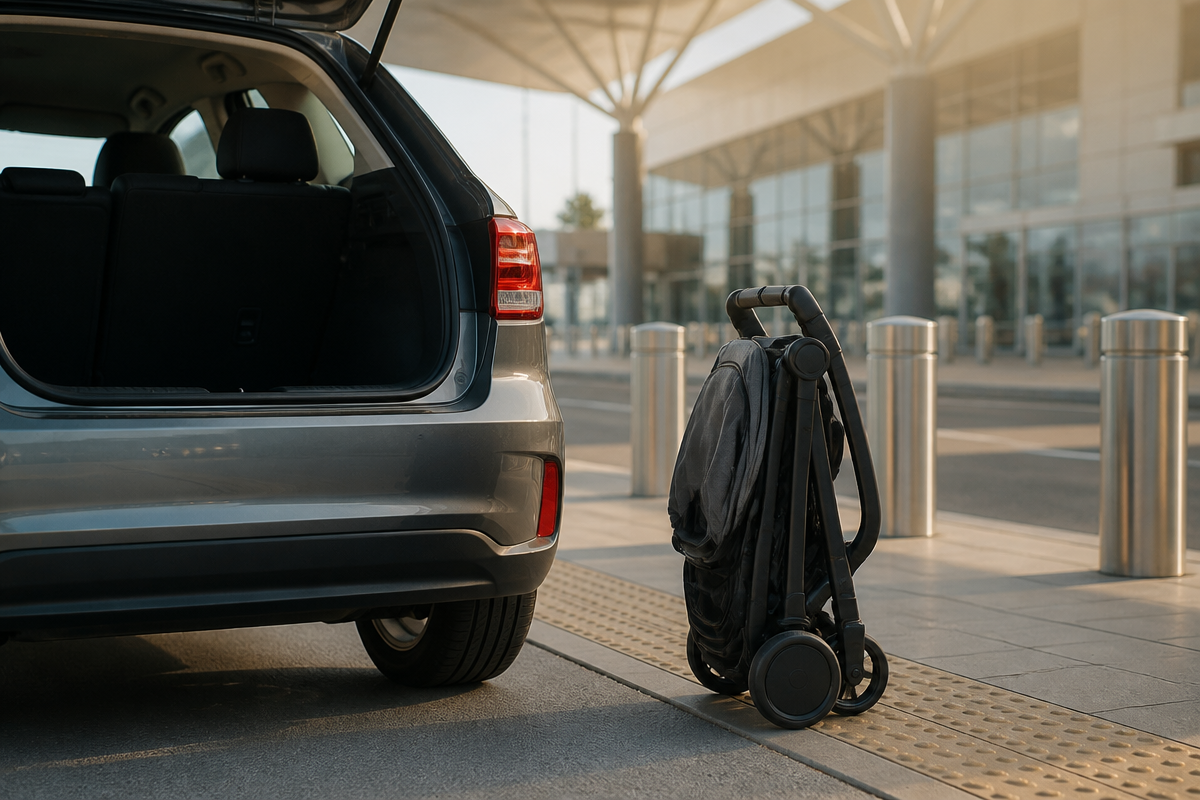
Start with your travel reality: measure the folded stroller against your car, storage space, and carrier’s current rules. A compact fold does not guarantee that a stroller will be accepted in an overhead bin.
A lightweight travel stroller is built for portability: lower weight for carrying, a compact fold for storage, and enough features to get through a travel day without misery. “Lightweight” and “compact” overlap, but they are not the same thing. A stroller can weigh under 10 lbs and still fold into a tall, awkward shape. Another can fold into a tiny package but weigh 16+ lbs because of a sturdier frame or larger wheels. The distinction matters when you are deciding between carrying a stroller through busy airports or stuffing it into a tight car trunk.
Lightweight strollers typically weigh between 9 to 15 pounds. Travel strollers as a broader category range from about 10 to 17 pounds. A full size stroller often exceeds 20 lbs; the Chicco Bravo Trio travel system, for instance, weighs around 25 lbs. At the other end, the MamaZing Ultra Air X weighs 9.9 lbs and costs about $200, making it the lightest stroller in many recent comparisons. These lighter options reduce fatigue for parents during long outings and improve maneuverability in crowded spaces.
Not every compact travel stroller is overhead bin compatible. Folded dimensions vary, and aircraft overhead compartment sizes differ by plane type. A compact stroller that fits your apartment closet or a subcompact car trunk may still need to be gate-checked on a regional jet. Frequent flyers, urban families juggling a diaper bag and a stroller on the subway, and grandparents who need to lift a stroller in and out of a car all benefit from this category.
BabySmartPicks relies on desk research, manufacturer specs, and published editorial reviews for this article. We have not hands-on tested every model mentioned. Always confirm current specifications, airline rules, and car seat compatibility on official manufacturer and airline sites before you buy or fly.
Lightweight vs. Compact: How to Read Weight and Fold Specs
US brands label strollers “lightweight,” “travel,” “compact,” or “everyday stroller” without consistent definitions. Focus on numbers instead of marketing copy.
Weight Categories with Examples
- Under 13 lbs (ultra-light):
- MamaZing Ultra Air X: 9.9 lbs
- Kolcraft Cloud Plus: 10.1 lbs
- gb Pockit+ All City: 13.1 lbs
- Note: These smaller strollers sacrifice ride comfort and storage for lightest weight.
- 13 to 17 lbs (typical compact travel stroller band):
- Joolz Aer 2: 14.3 lbs
- Colugo Compact+: 16.2 lbs (about $299)
- UPPAbaby Minu V3: 16.7 lbs
- Note: Lightweight strollers are beneficial for frequent travelers and urban families even at this weight.
- 18 to 22 lbs (light everyday stroller):
- More recline positions, bigger canopy, sturdier frame.
- Typically gate-checked rather than carried into the cabin.
Folded Size Examples
- gb Pockit+ All City: folds to a volume of 2,215 cubic inches, small enough to wedge into a backpack-sized space.
- Joolz Aer 2: folds to 9 inches wide, which helps in tight spaces like narrow closets or between suitcases in a trunk.
- Umbrella stroller: folds narrow but stays tall.
- Trifold compact stroller: collapses in all three dimensions but may be wider.
Most travel strollers fold compactly for easy storage, but the shape of the fold matters as much as total volume.
Specs to Write Down When Comparing
- Stroller weight in lbs
- Folded dimensions (L x W x H in inches)
- Unfolded width (for doorways and aisles)
- Child weight capacity and height limit
Key Features to Look For in a Compact Travel Stroller
The best travel strollers depend on your priorities, not on a universal ranking. Here is what to evaluate:
Weight and Fold Mechanism
Key features to consider for lightweight strollers include weight and fold mechanism. Fold speed and one-hand claims vary by model and can depend on whether a locking mechanism or safety latch must also be engaged. If possible, try the fold in a store before buying.
Recline and Leg Rest
A reclining seat with multiple positions helps for naps. An adjustable footrest or leg rest keeps toddler legs from dangling. Not all lightweight options include either.
Canopy and Sun Protection
A large UPF 50+ canopy is essential for sun protection in travel strollers, especially for families in CA, FL, AZ, or TX. Compact strollers help families use small storage spaces effectively, but their canopies are sometimes undersized. Look for extendable panels or plan to clip on an aftermarket shade.
Storage Basket
Full-size strollers often have larger storage baskets than travel strollers. An easily accessible storage basket in a compact model might only hold a few essentials rather than a full diaper bag.
Wheels and Durability
Smaller wheels and less suspension are common trade-offs. Most travel strollers lack features like reversible seats and adjustable handlebars. Front wheels on compact models tend to be 5 to 6 inches versus 8+ inches on full-size models; rear wheels follow the same pattern.
What to Prioritize by Travel Mode
- Flights: compact fold, carry strap, fast fold/unfold
- Road trips: easy trunk fit, deeper recline for naps
- City walks: sturdy frame, decent wheel size, a cup holder or organizer attachment point
Newborn and Car Seat Compatibility: What to Know Before You Buy
Many lightweight travel strollers are not safe from birth in their standard seat. A newborn needs a fully flat recline or a compatible infant car seat snapped onto the stroller frame.
Car seat compatibility is critical when using a stroller as a travel system from birth. Car seat compatibility varies by stroller model and brand. Some strollers come with car seat adapters; others sell them separately. The Joolz Aer 2 accepts car seat adapters from birth, making it work as part of a pseudo travel system. The UPPAbaby MINU V3 is compatible with infant car seats using UPPAbaby’s own adapters. Among Baby Jogger models, the Jogger City Tour 2 (Baby Jogger City Tour series) can pair with certain infant car seats to create a lightweight option for newborns.
By contrast, the MamaZing Ultra Air X does not have car seat adapters and is suitable for children 6 months and older. The Colugo Compact+ is not compatible with car seats and is suitable for children 4 to 6 months old, depending on head control. Always confirm exact car seat model fit on both the stroller and car seat manufacturer pages; do not assume universal compatibility.
Safety basics: follow the minimum age and weight published in the stroller’s manual. Do not use aftermarket infant inserts that the manufacturer has not approved. BabySmartPicks does not provide medical advice. For questions about how long a newborn should sit in a car seat during travel, consult a pediatrician.
Comfort for Baby: Seat, Recline, Leg Rest, and Canopy
A super-compact fold often means a smaller seat and fewer comfort features. Families planning full days of walking should look closely at these specs.
Seat and Weight Capacity
Many compact travel strollers list a weight capacity of 40 to 50 lbs, but height and seat depth often matter more. A tall 3-year-old may outgrow a shallow seat well before hitting the weight limit. Check both numbers.
Recline Styles
Recline styles range from strap-based (light, simple, usually two positions) to lever-based (heavier, more positions, sometimes near-flat). Adjustable recline and footrests enhance comfort for napping children in strollers. If the seat reclines to near-flat, airport and airplane naps become more practical. For rough or mixed surfaces, compare wheel size, suspension, and the manufacturer’s terrain guidance rather than relying on a universal comfort rating. Smaller wheels can feel bumpier on gravel or uneven pavement.
Leg Rest
A leg rest helps toddlers sleep without their legs hanging. Some models include an adjustable footrest; others have a fixed bar or nothing at all.
Canopy and Sun Protection
For sun protection, look for a canopy with UPF 50+ fabric and a peek-a-boo window. Smaller canopies are common on ultra-compact models; parents in sunny climates may need a clip-on shade extension for deeper coverage.
Comfort and Convenience for Parents: Fold, Carry, and Storage
Real travel tasks: folding at airport security, carrying a stroller plus a diaper bag through a terminal, lifting it into a rental car trunk, squeezing it into storage space in a studio apartment.
Fold Types
Fold types in plain language: a one handed fold uses a single lever or button; a two-hand fold needs both hands on different parts of the frame. A standing fold means the stroller folds and stays upright without leaning. Most strollers require you to engage a locking mechanism after folding to keep it closed. Travel strollers are designed for easy transport and storage during travel, and a fast, reliable fold makes the difference between smooth transitions and chaos.
Carry Options
For carry options, a built in carry strap or shoulder strap lets you sling the folded stroller over one shoulder while holding your child. Some models include a crossbody strap; others require a separate travel bag. Using lightweight strollers reduces fatigue for parents during outings, but only if the carry system distributes weight well. A stroller that folds flat and has a carry strap can be managed through subway stairs or across a parking lot.
Storage Basket
The UPPAbaby Minu V3 has a 20-pound storage basket limit, which holds a medium diaper bag. Many ultra-compact strollers have storage basket capacity for only a few essentials like a wallet, keys, and a water bottle. If you rely on a backpack-style diaper bag, you may not need much under-seat storage. Small extras like a cup holder, parent organizer, or snack tray are often sold separately. Storage bags that clip onto the handlebar can add capacity but may affect steering if overloaded.
Travel Logistics: Airports, Airplane Seats, Gate Check, and Airline Rules
Airline rules are not universal
Airline, aircraft, route, and available bin space can all affect whether a stroller may travel in the cabin or must be gate-checked. Check your carrier’s current policy immediately before travel, and treat any “overhead-bin compatible” marketing claim as a size reference—not a guarantee.
US airline stroller policies vary by carrier, aircraft, and route. No stroller is guaranteed to fit every overhead bin or every airplane seat area. Parents must check their specific airline’s rules before each flight.
American Airlines allows a fully collapsible stroller into the cabin if it weighs less than 20 lbs and fits in the overhead bin. Frontier allows strollers in the cabin only if they fit overhead. Southwest permits one stroller per child to be gate-checked free. Policies shift, and gate agents have final discretion even when a stroller meets published size limits. A carry on bag that technically fits may still be gate-checked if bins are full.
At airport security, screening staff may ask you to remove your child, fold the stroller, and send it through screening or have it hand-inspected. Procedures can vary by airport and equipment, so follow staff instructions and allow extra time.
Gate check versus counter check: gate check lets you use the stroller through the terminal and retrieve it at the jet bridge. Counter check means tagging it as luggage at the ticket desk, losing access for the entire trip through busy airports. A gate check bag or labeled stroller travel bag reduces the risk of scratches and makes identification easier. Stroller damage during checked baggage handling is a known risk.
If you are also traveling with car seats, plan who carries what. Some families attach an infant car seat to a compact travel stroller using brand-approved adapters. Confirm FAA rules for car seats used in an airplane seat, and verify your airline accepts the specific seat model.
Everyday Use vs “Just for Trips”: Do You Really Need a Separate Travel Stroller?
For the broader framework—age, terrain, storage, car fit, and budget—use our practical guide to choosing a baby stroller.
Not every family needs two strollers. A single well-chosen compact stroller can serve as both a primary stroller for errands and a travel companion. Many parents who fly once or twice a year can gate-check their main stroller and skip buying a second one.
A dedicated lightweight travel stroller makes sense for frequent flyers taking several trips a year, families in walk-up apartments, caregivers with small car trunks, and grandparents who want something that is not their only stroller but a lightweight option they keep at their house. Some families use a Baby Jogger City Tour as both an everyday stroller and a compact travel stroller because it balances a reasonable fold size with a usable seat.
If your routine involves rough terrain, big grocery runs, or hours of walking daily, a sturdier everyday stroller with bigger wheels and more storage may serve you better. Full-size strollers often have larger storage baskets than travel strollers, and the ride quality on cracked sidewalks or gravel is noticeably better. Travel strollers typically fold more compactly than full-size strollers, so the trade-off is portability versus daily comfort. Think about how often you carry the stroller versus push it.
How to Compare Lightweight Travel Strollers: A Practical Checklist
Use this checklist when comparing several strollers side by side. Screenshot it or write down the answers for each model you are considering.
Specs
- Stroller weight (lbs)
- Folded dimensions (L x W x H)
- Minimum and maximum child weight and age
- Newborn or infant car seat compatibility (and which adapters)
- Recline range and number of positions
- Leg rest: adjustable, fixed, or none
- Canopy depth and UPF rating
- Storage basket capacity (lbs if listed)
- Included accessories: rain cover, travel bag, cup holder
Usability
- One-hand or two-hand fold
- Does it stand when folded?
- Carry strap, handle, or shoulder strap
- Handlebar height (tall parents, check this)
- Wheel size, front wheels and rear wheels
- Suspension quality
- Fabric: machine washable or wipe-clean
Travel-specific
- Does it meet your airline’s overhead bin size and weight rules?
- Do you plan to gate check or carry on?
- Do you need a stroller travel bag?
- How will you carry the stroller, diaper bag, and car seat through the airport?
Double-check the latest specifications, manuals, and any recall notices on manufacturer and CPSC sites before buying. Models and limits change over time.
Popular Examples and Use Cases (Without Crowning a “Best” Stroller)
- Use case: overhead bin priority. A parent who flies weekly for work with a toddler picks the lightest weight option they can find. The MamaZing Ultra Air X, at 9.9 lbs and about $200 at regular price, is a lightweight option focused purely on portability. It lacks car seat adapters and works only for children 6 months and older, so it is not a newborn solution. The gb Pockit+ All City (13.1 lbs) folds to 2,215 cubic inches and is another overhead bin contender, though its compact fold means a small seat and limited recline.
- Use case: car seat compatibility for a newborn. A family with a newborn picks UPPAbaby strollers because the Minu V3 is compatible with infant car seats and offers superior ride quality for city sidewalks. At 16.7 lbs it is heavier than other strollers in this class, but the trade-off is a great stroller for both air travel and everyday use on uneven terrain.
- Use case: two-stroller household. A suburban family keeps a full-featured main stroller at home for daily walks and adds a lighter, cheaper compact stroller for grandparents’ visits and international trips with tight luggage limits. A Summer Infant umbrella-style model or a Baby Jogger City Tour works well as a second stroller without duplicating all the features of the primary stroller.
- Use case: all-purpose single stroller. For families who want one and only stroller to cover everything, a mid-weight compact model (14 to 17 lbs) with decent recline, a UPF 50+ canopy, and car seat adapters is the most practical middle ground. The Joolz Aer 2 (14.3 lbs, folds in under two seconds) or the Colugo Compact+ (16.2 lbs, suitable from 4 to 6 months, about $299) sit in this range, though neither has all the features of a full size stroller.
FAQs About Lightweight Travel Strollers
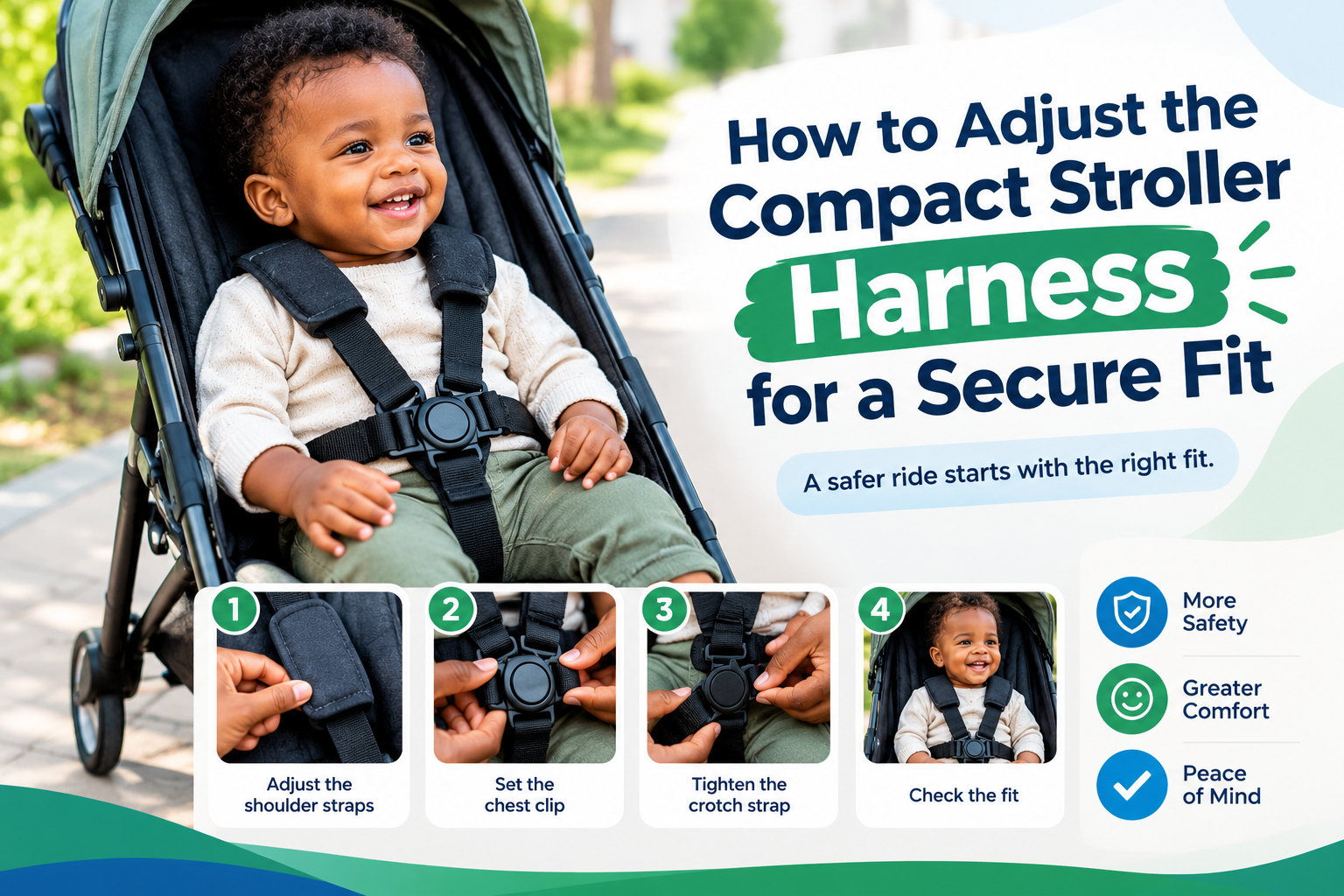
- Are lightweight and compact strollers safe for everyday use? Yes, if they meet US safety standards, have a five-point harness, and reliable brakes. The trade-off is ride comfort: smaller wheels and less suspension make for a bumpier ride on rough terrain. The average weight of a travel stroller (10 to 17 lbs) is manageable for daily use but may feel less stable than a 22-lb everyday model.
- What is the difference between a travel stroller and a travel system? A travel stroller is a standalone compact stroller. Travel systems pair a stroller frame with a matching infant car seat and sometimes a bassinet. Some travel strollers accept certain car seats via adapters but are not sold as bundled systems.
- Can a travel stroller replace my everyday stroller? For many parents, yes. If you primarily walk on smooth sidewalks and do not need massive storage, a mid-range compact stroller with a deeper recline and decent canopy can serve both roles.
- Can I always bring my compact stroller into the airplane cabin? No. Policies differ by airline, aircraft type, and how full the overhead compartment is. Even strollers marketed as overhead bin compatible may be gate-checked at the crew’s discretion. Always verify your carrier’s current rules.
- Can a travel stroller handle rough terrain or theme-park cobblestones? Ultra-light models with smaller wheels struggle on uneven surfaces. If your trips involve mixed terrain, prioritize wheel size and suspension over minimal weight, and check the manufacturer’s intended-use guidance.
- Which accessories are worth packing? A rain cover, a travel bag for gate-checking, and a clip-on cup holder cover most scenarios. Storage bags, mosquito nets, and footmuffs depend on climate and destination. Every extra adds weight and bulk, so pack only what your trip demands.
- What age do kids outgrow a travel stroller? Most compact models list weight limits of 40 to 50 lbs. Many US children ride from about 6 months through age 3 or 4. Height and seat depth often become limiting factors before weight does.
Verify before purchase or travel
Confirm the exact model’s minimum age and approved newborn configuration, child limits, folded dimensions, car-seat adapters, airline policy, and current recall status directly with the manufacturer, carrier, and the U.S. Consumer Product Safety Commission. Specifications and policies change, and this article does not represent hands-on testing of every model.
If you are comparing a premium or modular stroller against a value-focused alternative for everyday use, see our Nuna vs. Mockingbird stroller comparison.
Final Conclusion
Choosing the right lightweight travel stroller means balancing portability, comfort, and features to fit your family’s unique travel needs. Consider your child’s age and weight, how often and where you’ll use the stroller, and your priorities for fold size, weight, and car seat compatibility. While ultra-light models like the MamaZing Ultra Air X excel in portability, they may lack newborn compatibility and storage. Mid-weight strollers such as the Joolz Aer 2 and UPPAbaby MINU V3 offer more features, smoother rides, and infant car seat compatibility but weigh more. No single stroller fits every airline or travel scenario, so always verify current specifications and airline policies before flying. Use the practical checklist provided to compare models side by side, and choose a stroller that eases your travel experience without compromising safety or convenience. A well-chosen lightweight travel stroller can make family trips smoother, more comfortable, and less stressful for both parents and children.